

Ten years ago, a corporate relations department's CRM was primarily used to store contact details and a history of interactions with partner companies. By 2026, it is expected to do more: identify a partner company that is disengaging before the break is visible, or flag an offer that is stagnating without applications. The word "intelligent" has become an almost systematic marketing claim as soon as a vendor adds an AI feature to their CRM. This marketing inflation blurs the selection criteria for institutions looking to equip themselves.
What is an intelligent CRM in the world of education?
An intelligent CRM is a system that does more than just record interactions between the institution, its partner companies, and its learners: it continuously analyzes them to draw actionable insights and triggers or suggests actions accordingly. The difference from a standard CRM lies not in the number of features, but in what the system does with the data once it is entered.
A CRM that analyzes instead of just recording
A standard CRM logs what has happened: a corporate relations officer notes a call, records an offer received, or updates a placement status. The tool serves as a shared memory. It is useful, but it is passive—data enters the system and waits for a human to come and consult it.
An intelligent CRM goes further. For example, it can signal that:
- a partner company that used to post one offer per month has not posted any for two quarters,
- an internship offer remains without applications even though the average processing time is significantly shorter,
- a learner has not opened any follow-ups for several weeks even though they are approaching their mandatory search deadline.
A standard CRM contains this information without flagging it. An intelligent CRM detects it, interprets it, and triggers an alert or action—instead of waiting for a corporate relations officer to stumble upon it while manually browsing their database.
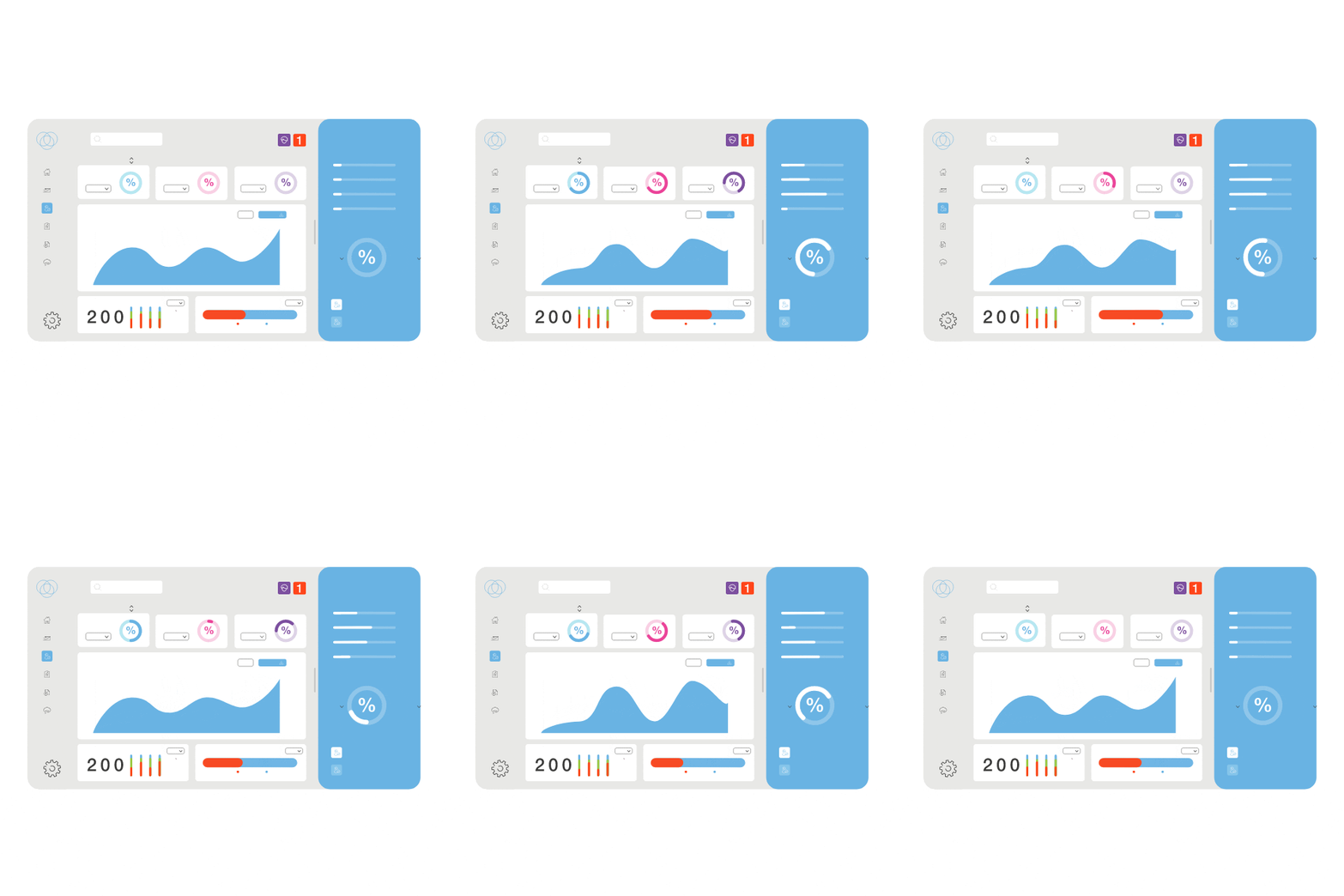
The criteria that separate an intelligent CRM from a simply "connected" one
Several characteristics make it possible to concretely distinguish a truly intelligent CRM from a tool that has only added a layer of AI on the surface.
Predictive scoring. Standard scoring adds up points based on manually set rules (sector, company size, length of partnership). Predictive scoring learns from past partnerships to identify patterns that precede disengagement or, conversely, an intensification of collaboration—correlations that a corporate relations officer might not always formulate on their own.
Detection of weak signals. An intelligent CRM does not just know who the partner company or the learner is: it spots variations in activity in real time—a company slowing down its offer postings, a learner applying repeatedly for the same type of position.
Action recommendations. Rather than limiting itself to a dashboard that requires interpretation, the system suggests the most relevant next step: follow up with this company, prioritize this learner, promote this offer—based on what has worked in comparable situations.
Data unification. Interactions between the institution, partner companies, and learners are inherently scattered (offers, applications, placements, exchanges). An intelligent CRM centralizes these flows to reason about the whole, rather than isolated silos.
Continuous improvement. The system refines its recommendations as it accumulates real-world results (filled offers, renewed partnerships), rather than remaining fixed on rules defined once and for all.
How to evaluate if a CRM is truly intelligent before you invest
Before selecting a tool, an institution can concretely verify:
- Predictive scoring : does the CRM learn from your past partnerships and placements, or is it limited to rules you have to define yourself?
- Signal detection : does the system alert you when a partner company slows down its activity, or when an offer remains without applications beyond an unusual timeframe?
- Action recommendations : does it suggest the next step to take, or does it just display data for you to interpret?
- Data unification : is information from companies, learners, and the institution actually cross-referenced, or does it remain in siloed modules?
- Traceability : are the recommendations explainable—useful for justifying support in the context of Qualiopi ([internal link: Qualiopi article])?
A CRM that checks these boxes truly changes how a corporate relations department works on a daily basis. A CRM that is limited to an AI wrapper on a standard data-entry tool only provides marginal gains.
What this concretely changes for an institution
Take a corporate relations manager who handles 200 partner companies and several hundred learners over the course of a year. Without an intelligent CRM, they have to manually go through their portfolio to identify which companies haven't been in touch recently, or which offers are stagnating—a task that becomes impossible to do comprehensively as volume grows.
With an intelligent CRM, they see companies at risk of disengagement, offers that need follow-up, and learners whose profiles match a recently published offer prioritized—without having to manually review everything. The decision remains theirs: the CRM sorts and prioritizes; it does not replace their judgment or the relationship they maintain with their contacts.
Frequently Asked Questions
Is a CRM "with AI" automatically an intelligent CRM?
No. Many software providers add a one-off AI feature without the tool actually analyzing data continuously or triggering actions. The criteria to check for are predictive scoring, signal detection, action recommendations, data unification, and continuous improvement.
Does an intelligent CRM replace the work of a corporate relations manager?
No. It sorts and prioritizes situations that require attention, but the decision to follow up with a company or guide a learner remains entirely human.
Is an intelligent CRM useful for a small institution?
Its value depends primarily on the volume of partner companies and learners to track. Below a certain volume, manual tracking remains manageable; beyond that, automating signal detection becomes necessary to ensure nothing slips through the cracks.
Does Grimp's CRM fall into this category?
Grimp's corporate relations CRM is designed specifically for the school-company context: tracking partnerships, job offers, and placements, with the matching and placement management features specific to this sector.
Our other articles
+150,000 candidates use Grimp to manage their job search with thousands of businesses!